The 126th U.S. Amateur: Merion, Philadelphia Country Club, and a Week of Weight
August 10–16, 2026 — 312 players, two Flynn-touched Philadelphia courses, and the ground where Bobby Jones finished the Grand Slam.
By The Historians Archive · Preserved Links
August 6, 2026 · 10:22 PM ET
6 min read
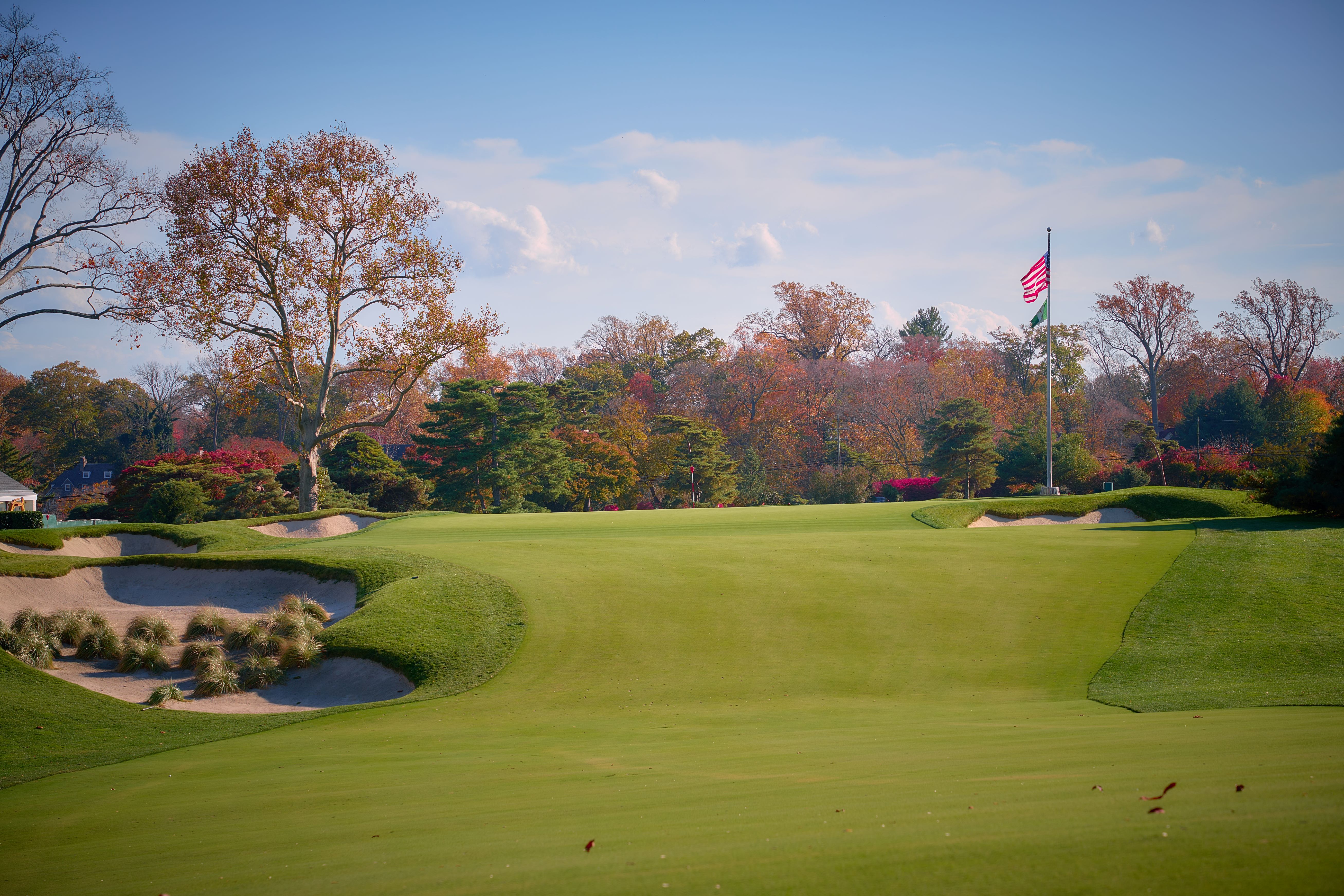
For one week in August, the oldest and most demanding title in amateur golf comes home to the Philadelphia sand belt of American championship history. The 126th U.S. Amateur will be played August 10–16, 2026, at Merion Golf Club in Ardmore, Pa., with Philadelphia Country Club in Gladwyne serving as stroke-play co-host for the opening two rounds.
It is a pairing of two William Flynn–touched properties, two very different tests, and two clubs whose names are stitched into USGA history. Here is what to know before the first tee shot.
The format: 312 in, 64 survive, one left standing
The championship opens with 36 holes of stroke play on Monday and Tuesday, with the field split between Merion's East Course and Philadelphia Country Club. Every player sees both. The low 64 scorers advance to match play, and from Wednesday forward the arithmetic is brutal: five 18-hole matches, then a 36-hole final on Sunday to decide the champion.
Merion's East will be set up at roughly 6,939 yards to a par of 70 — short by modern championship standards and completely beside the point. Merion does not defend itself with length. It defends itself with angles, with the white faces of its bunkering, with greens that reject anything approached from the wrong side, and with a closing stretch that has broken better fields than this one.

Philadelphia Country Club's Spring Mill course will play longer and more open across the two stroke-play days, and it will reward the player who can go low. That contrast is the quiet story of the first 48 hours: someone will post a number at Spring Mill, then have to survive Merion to keep it.
Merion: the most decorated small property in American golf
The 2026 U.S. Amateur is the 20th USGA championship contested at Merion and the seventh men's U.S. Amateur — a total no other club in the country can match. The East Course opened in 1912 on 126 acres, routed by Hugh Wilson, a club member and Princeton graduate with no design résumé who studied the great holes abroad before laying out what became a permanent argument that great golf is not a function of acreage.
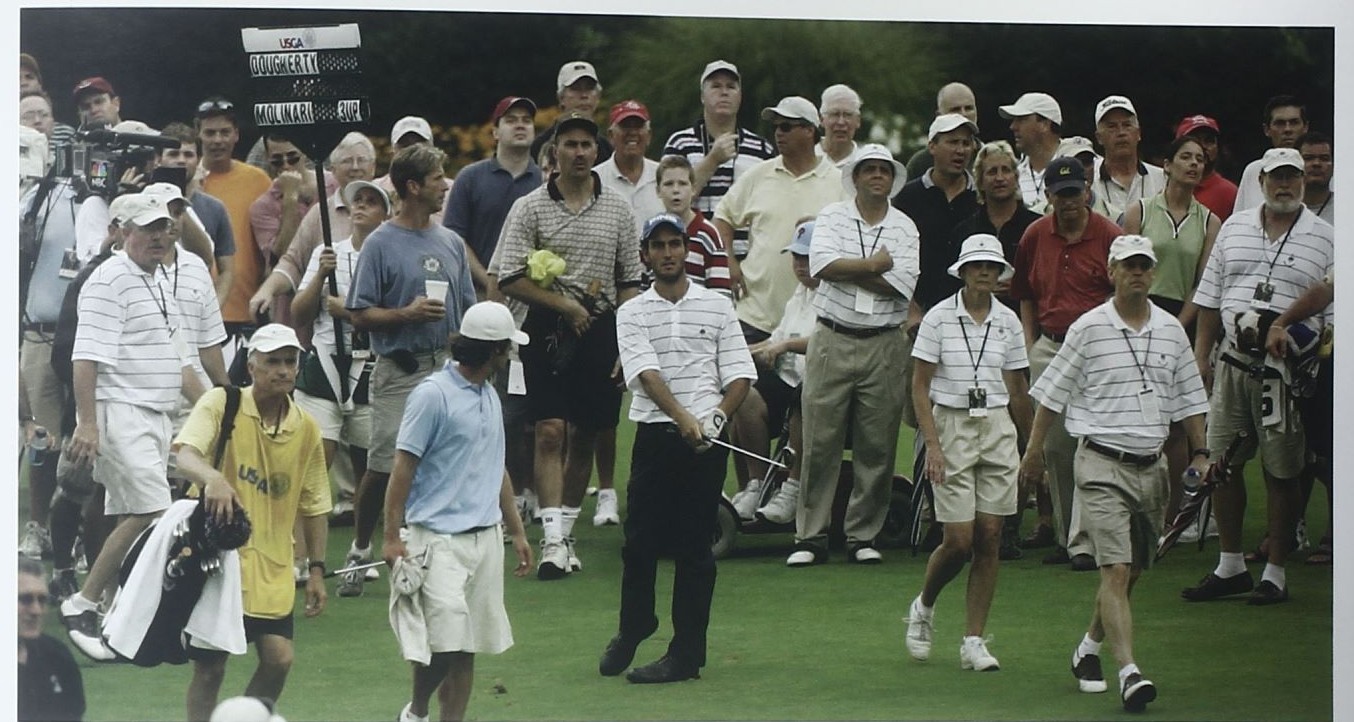
The U.S. Amateur roll call at Merion reads like a syllabus. Chick Evans won here in 1916. Bobby Jones won his first U.S. Amateur at Merion in 1924, then returned in 1930 to close out the Grand Slam on these greens — still the single most famous week in the history of amateur golf. Gary Cowan won in 1966, Chris Patton in 1989, and Edoardo Molinari in 2005, the last time the Amateur came through Ardmore.
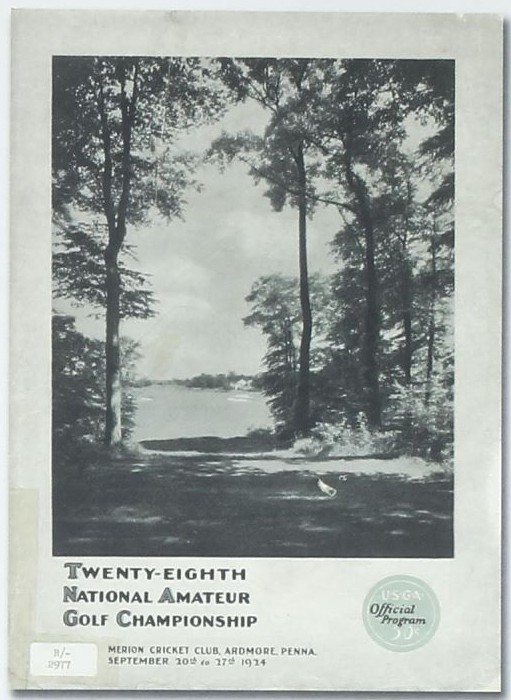
The professional side of the ledger is just as heavy: U.S. Opens in 1934, 1950 (Ben Hogan's 1-iron and the playoff that completed his comeback), 1971 (Lee Trevino over Jack Nicklaus), 1981 (David Graham's flawless final round) and 2013 (Justin Rose at 1 over par, which told you everything about how a 6,996-yard golf course handles the modern game). Add the 2009 Walker Cup, multiple U.S. Women's Opens and Women's Amateurs, and a recent East Course restoration under Gil Hanse that recaptured lost green edges and bunker faces, and the venue arrives in 2026 sharper than it has been in decades.
Philadelphia Country Club: Spring Mill's championship pedigree
Philadelphia Country Club, founded in 1890 and settled at its Gladwyne home in the 1920s, brings its own USGA history to the week. Its Spring Mill course — a William Flynn design, from the same hand that shaped so much of Philadelphia's golf and consulted on work at Merion — hosted the 1939 U.S. Open, one of the most consequential championships ever played.
That was the week Sam Snead came to the 72nd hole believing he needed a birdie, made a triple-bogey 8, and missed a playoff he would have won with a par. Byron Nelson beat Craig Wood and Denny Shute in the ensuing playoff for the first of his major titles. Snead never did win a U.S. Open, and the ghost of Spring Mill's 18th followed him for the rest of his career.
Since then the club has been a regular USGA qualifying site and a fixture of Philadelphia amateur golf. Serving as stroke-play co-host for a U.S. Amateur returns it to the national stage for the first time in generations — and gives the field a Flynn double-header in the same week.
The field
The U.S. Amateur field is capped at 312 players and remains one of the most democratic championships in golf: it is open to any amateur with a Handicap Index of 2.4 or lower, with the vast majority of spots earned through 36-hole qualifiers staged across the country. A slate of exemptions fills the rest — the defending champion, recent U.S. Amateur finalists and semifinalists, leading finishers from other USGA amateur championships, the reigning Amateur Championship (British Amateur) winner, and the top players in the World Amateur Golf Ranking.
Expect the usual composition: a heavy contingent of the best college players in America, a strong international presence, a handful of mid-amateurs who qualified the hard way, and a few teenagers who will be household names within five years. Mason Howell arrives as the defending champion after his commanding 7-and-6 victory in the 2025 final at The Olympic Club.
The favorites — and why Merion scrambles the form guide
On paper, the shortlist will come from the top of the World Amateur Golf Ranking, the Walker Cup pool, and the college players who spent the spring winning national events. Those are the names that will be on the tee sheet's early groupings and on the broadcast's opening montage.
In practice, Merion is the great equalizer. Match play over five days is already a coin-flip machine — a 64-player bracket has produced champions seeded near the bottom and sent No. 1 seeds home on Wednesday afternoon. Put that bracket on a golf course that punishes the wrong angle more than the short drive, and length advantages shrink to almost nothing.
The player to back at Merion is the one who can control trajectory into firm greens, who putts well on subtle, quick surfaces, and who has the temperament to play the 14th through 18th holes even par when it matters. That profile does not always belong to the longest hitter in the field. It rarely has here.
What to watch for
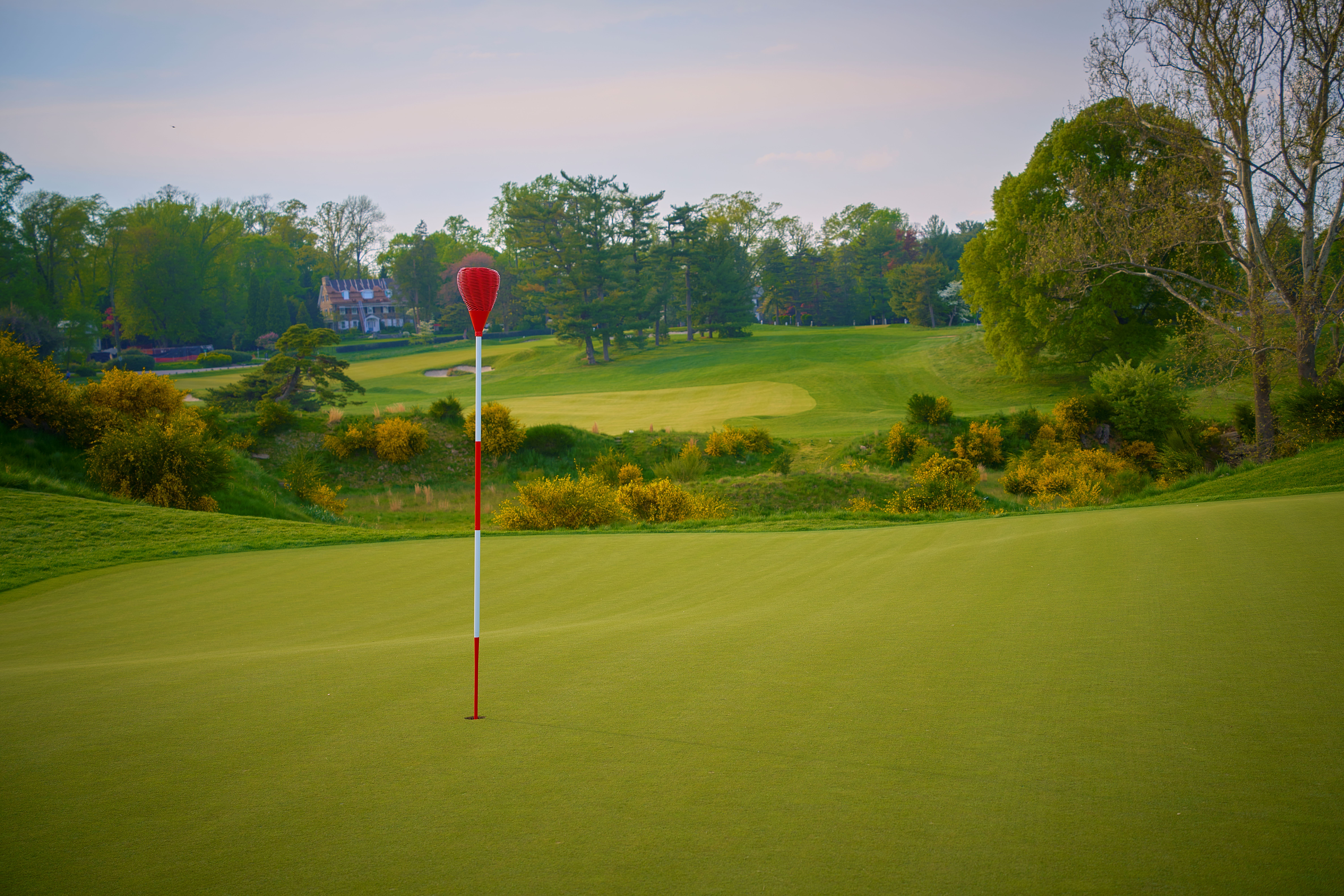
Three things will decide the week. First, the stroke-play split: a hot round at Spring Mill can carry a player into the bracket, but the East Course will decide who is genuinely playing well. Second, the weather — Merion firm and fast in August is a fundamentally different examination than Merion soft. Third, the closing stretch. The Quarry holes and the walk up 18 have decided championships here since 1930, and there is no reason to think 2026 will be the exception.
Whoever hoists the Havemeyer Trophy on Sunday evening joins a list that runs from Bobby Jones to Tiger Woods, and does it on the ground where Jones finished the Grand Slam. That is the weight of this week.
Originally published
Read this piece on Club Docket →