Five Farms at One Hundred: Baltimore Country Club, the USGA, and the Course Keith Foster Put Back
As the U.S. Senior Amateur finally comes to Maryland, a look at the club that hosted an Open in 1899, a major in 1928 — and the 2014 restoration that gave Tillinghast his greens back.
By The Historians Archive
September 1, 2026 · 8:00 AM ET
11 min read
Match play began Monday morning on A.W. Tillinghast’s East Course at Five Farms, and by evening the bracket had already eaten its medalist. Trae Cassell had opened the 71st U.S. Senior Amateur with 68-67 — five under, seven clear, one of the lowest 36-hole totals in the championship’s history — and then went out in the Round of 64. The defending champion, Mike McCoy, never got that far; he lost a thirteen-for-three playoff for the last spots in the draw. Marc Ehudin, who grew up in Pikesville twenty minutes from the first tee, survived that same playoff and played on.

It is the kind of opening that makes a championship, and it is the kind of opening this ground has been producing for a very long time. The U.S. Senior Amateur had never been played in Maryland before this week. Almost every other national championship worth the name has already been through Baltimore Country Club.
An Open Before the Century Turned
The club was founded on January 13, 1898, on roughly 150 acres in Roland Park — the first planned suburban development in the United States, laid out on the northern edge of Baltimore City. Edward H. Bouton, president of the Roland Park Company, had floated the idea two years earlier as a way to sell houses. It worked better than that. Membership ran toward a thousand almost immediately. Dues were twenty dollars for men and ten for women, and unlike most clubs of that generation, Baltimore admitted women from the beginning rather than tolerating them on assigned days.
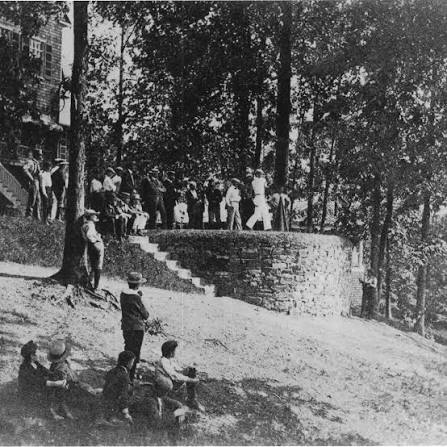
One year after the founding, the club staged the fifth U.S. Open. On September 14, 1899, from a first tee that is still preserved on the Roland Park property, the national championship began on the first eighteen-hole course built within a hundred miles of Baltimore. Willie Smith of Scotland won with 315 — twenty-seven over par — out of a total purse of $750. The score is a curiosity. The fact is not. Most American cities of comparable size were still arguing about their first nine holes; Baltimore had already hosted the U.S. Open.
Fire eventually took the original shingled clubhouse, twice: damaged in October 1930, nearly destroyed on January 5, 1931. The Georgian replacement opened April 1, 1932, in the pit of the Depression, and its Belgian marble foyer and stone-and-pine Grille are largely untouched today. The Roland Park golf course itself closed in 1962 and most of the land was sold, but the clubhouse never closed. Baltimore remains one of a small handful of American clubs still operating two full campuses — town and country, 1898 and 1926.
Buying Land, Then Buying Tillinghast
The move north was an arithmetic problem before it was an architectural one. By the late 1910s club president Dr. Joseph S. Ames was looking at more than 3,000 members, some 1,600 of them golfers, on one increasingly hemmed-in course. In 1920 he appointed a New Property Committee under Regnal W. Baldwin with two assignments: find a second campus, and find an architect.
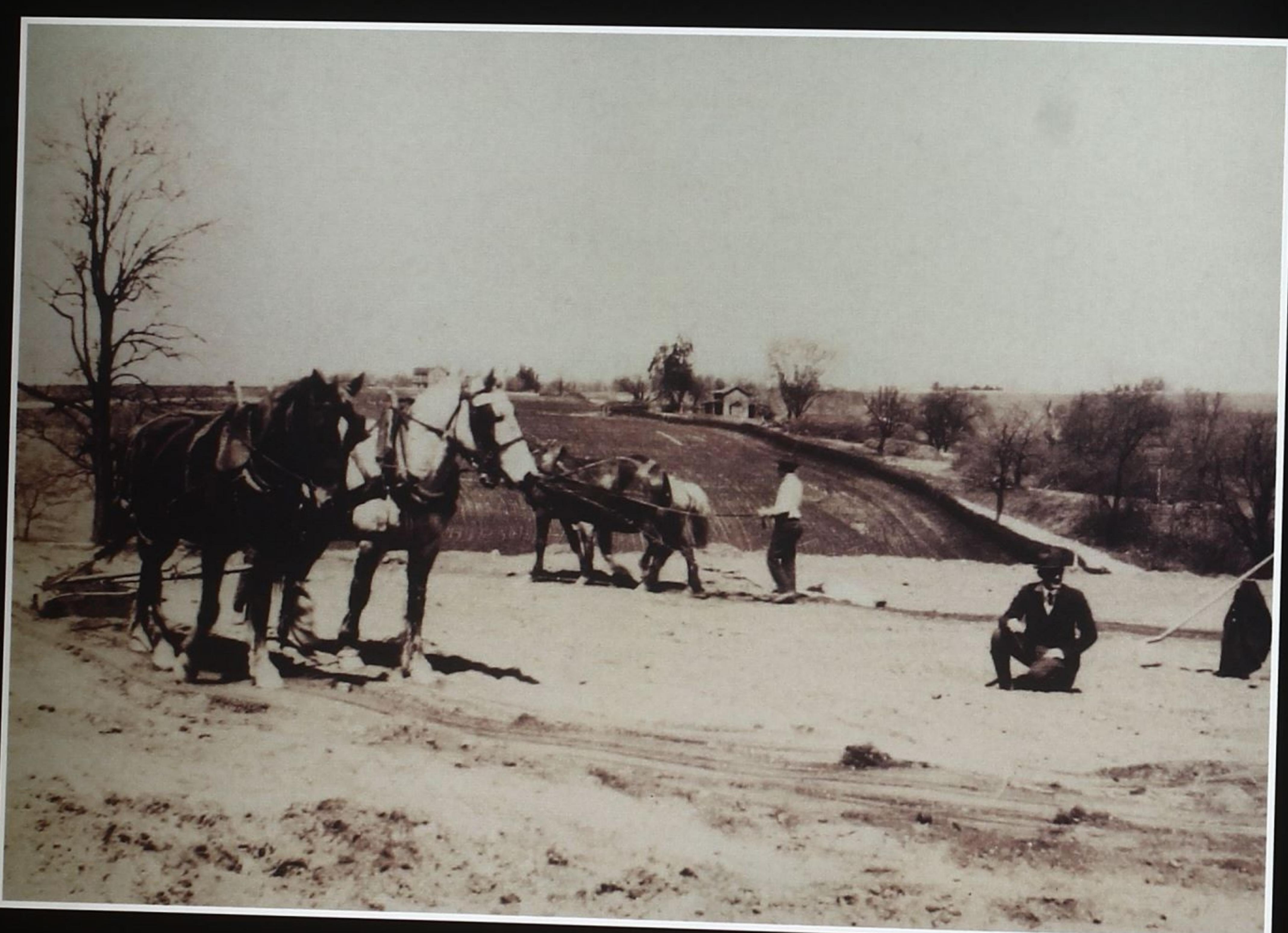
The land came first — Stuart Olivier’s 390-acre estate seven miles north of the city, assembled from five separate farms, finalized in February 1921 and remembered ever after as Five Farms. The architect took longer. The committee traveled the mid-Atlantic and as far west as Chicago before deciding that what Tillinghast had done at Baltusrol and Winged Foot was the right idea for their rolling horse country. Albert Warren Tillinghast was formally hired in June 1924 to build two courses. Only the East was ever his.
That distinction matters, because Tillinghast was also involved in choosing the ground, and architects allowed to pick their own site tend to pick land that already wants to be golf. Where Winged Foot and Baltusrol required him to manufacture drama on contained sites, Five Farms handed it to him. He benched greens into hillsides, ran fairways along existing tilt, and edited rather than invented. The result is one of his most undulating designs; level lies are genuinely scarce. The East opened for play in 1926 and Tillinghast kept adjusting it — through head greenkeeper Bob Scott — right up until the professionals arrived.
A Century of Championships on One Piece of Ground
They arrived in 1928, two years after opening, for a PGA Championship still contested at match play. Leo Diegel beat Al Espinosa 6 and 5. A club thirty years old had now hosted an Open and a major on two different properties, which is a line very few American clubs can write.
Four years later the U.S. Amateur came, the thirty-sixth national amateur, September 1932. C. Ross Somerville, a Canadian, beat Johnny Goodman 2 and 1; Goodman would win the U.S. Open the following year as the last amateur to do it. Chick Evans, Max Marston and Bobby Jones were all on the property that week. The championship also left behind something no one thought about at the time: a photographic record of every hole, which the club filed away and kept.
The 1965 Walker Cup is the one club memory holds most tenderly. The United States and Great Britain & Ireland tied 11-11 — Deane Beman holing on the eighteenth to win his match, Clive Clark holing on the same green to halve his and secure the tie. In 1988 the U.S. Women’s Open came, and Liselotte Neumann won it against a field that included Nancy Lopez, Betsy King, Beth Daniel, Juli Inkster, Dottie Pepper and Ayako Okamoto. The course held. Then the Champions Tour’s Senior Players Championship ran three straight years at Five Farms: Loren Roberts in 2007, D.A. Weibring in 2008, Jay Haas in 2009.
Open, PGA, Amateur, Walker Cup, Women’s Open, three Senior Players — and now, at last, a Senior Amateur. It is the twenty-seventh USGA championship contested in Maryland, and the first of this one. The 2028 Western Amateur and the 2031 U.S. Women’s Amateur are already on the books.
July 2014: Everything Below the Grass
What the USGA is playing this week is not quite what Somerville played, but it is closer than it has been in eighty years. In July 2014 the club closed the East Course. The stated purpose was narrow and honest: restore the greens to their original design and size, to USGA specifications, and regrass greens and fairways — without leaving a new signature on a Tillinghast course.
Keith Foster was the architect, and he was blunt about the job description. “My job here at Five Farms is not to act as an architect, but rather the ‘consummate field man,’” he said, “to be very mindful to honor Tilly and his East Course — expansive, wide, and bold — not to leave my mark or, in fact, any mark, but to bring back the greens and the fairways to what Tillinghast initially laid out. I guess when we are finished my reward will be to receive credit for what we didn’t do.”
He had material most restoration architects would trade a decade for: original design plans, hole-by-hole images of the greens, and those 1932 U.S. Amateur photographs of every hole. The club had kept the paper for eighty-two years.
The construction sequence, run by McDonald & Sons under project superintendent Kyle Trzaskos with head greenkeeper Tim Kennelly, was methodical to the point of severity. Cut and remove the sod while preserving original contour. Scan the surface with satellite GPS. Core out sixteen inches of old green cavity. Install drainage, cover it with four inches of pea gravel, then twelve inches of greens mix — sand, soil and peat. Rebuild the contour off the GPS model. Fertilize, seed with 007 creeping bentgrass, roll for seed-to-soil contact, blanket the green for eight to ten days, then uncover, feed, and water four or five times a day until the first mowing at day twelve to fourteen.
The numbers explain why it was worth doing. The seventeenth green had shrunk to 5,611 square feet including collar, of which only 1,024 square feet — 18.2 percent — was flat enough to hold a hole location. Restored to Tillinghast’s footprint it came back at 6,910 square feet, with the pin positions that come with it. Multiply that across eighteen greens and you have recovered not just square footage but the entire rotation of a golf course.
Fairways came back out to their original widths — the fifth widened at least ten feet on each side to re-establish Tilly’s fairway-to-bunker relationship — and bunkers went back on their original lines. On the fourteenth, the longest hole on the property, Foster restored the Great Hazard that gave the hole its name: a hundred yards of no-man’s-land traversing the fairway, eighty yards deep. Hell’s Half Acre. A bar to par, as the club’s own hole notes put it, and a gate to hell.
Trees came down where they had closed corridors and hidden the creek. Foster has said very little about any of it publicly; he works almost exclusively on restorations, takes no more than two jobs at a time, and declines to nominate his own work for awards.
The East Course reopened on May 14, 2015. Club president Dan Falvey cut the ribbon alongside Pam Ytterberg — A.W. Tillinghast’s granddaughter — in the same year her grandfather was posthumously inducted into the World Golf Hall of Fame. Thad Layton of the Arnold Palmer Design Company returned in 2022 to refine green complexes, add fairway bunkering and build new tees.
What 6,564 Yards Proves
The USGA set the East Course this week at 6,564 yards, par 70, rating 72.9, slope 137. From the very back it can stretch past 7,100. They did not need it. Stroke-play scoring averaged north of 76, and the reason is not length — it is the thing Foster spent 2014 putting back. Restored greens with recovered pitch and recovered edges, set at modern speeds, sitting on ground that gives you almost no level stance. Tillinghast’s hallmark, as Foster describes it, lives in the first ten or twelve feet in front of each green, where the surface blends into the fairway ahead of it. Get that wrong and the course is merely long. Get it right and a 6,500-yard par 70 humbles a national field.
That is why the medalist shooting five under looked extraordinary, and why he still went out the next morning. On this ground, the number on the card has never been the whole story. It wasn’t in 1899, when 315 won an Open. It wasn’t in 1965, when a tie felt like a victory to both sides of the Atlantic. And it wasn’t Monday, when a hundred-year-old Tillinghast course, restored by an architect who wanted credit only for what he didn’t do, did exactly what it was built to do.
Originally published
Read this piece on Club Docket →