Seven Times at Merion
Six U.S. Amateurs on the East Course, from Chick Evans to Edoardo Molinari — and what they say about the final this Sunday.
By The Historians Archive
August 13, 2026 · 12:48 PM ET
9 min read
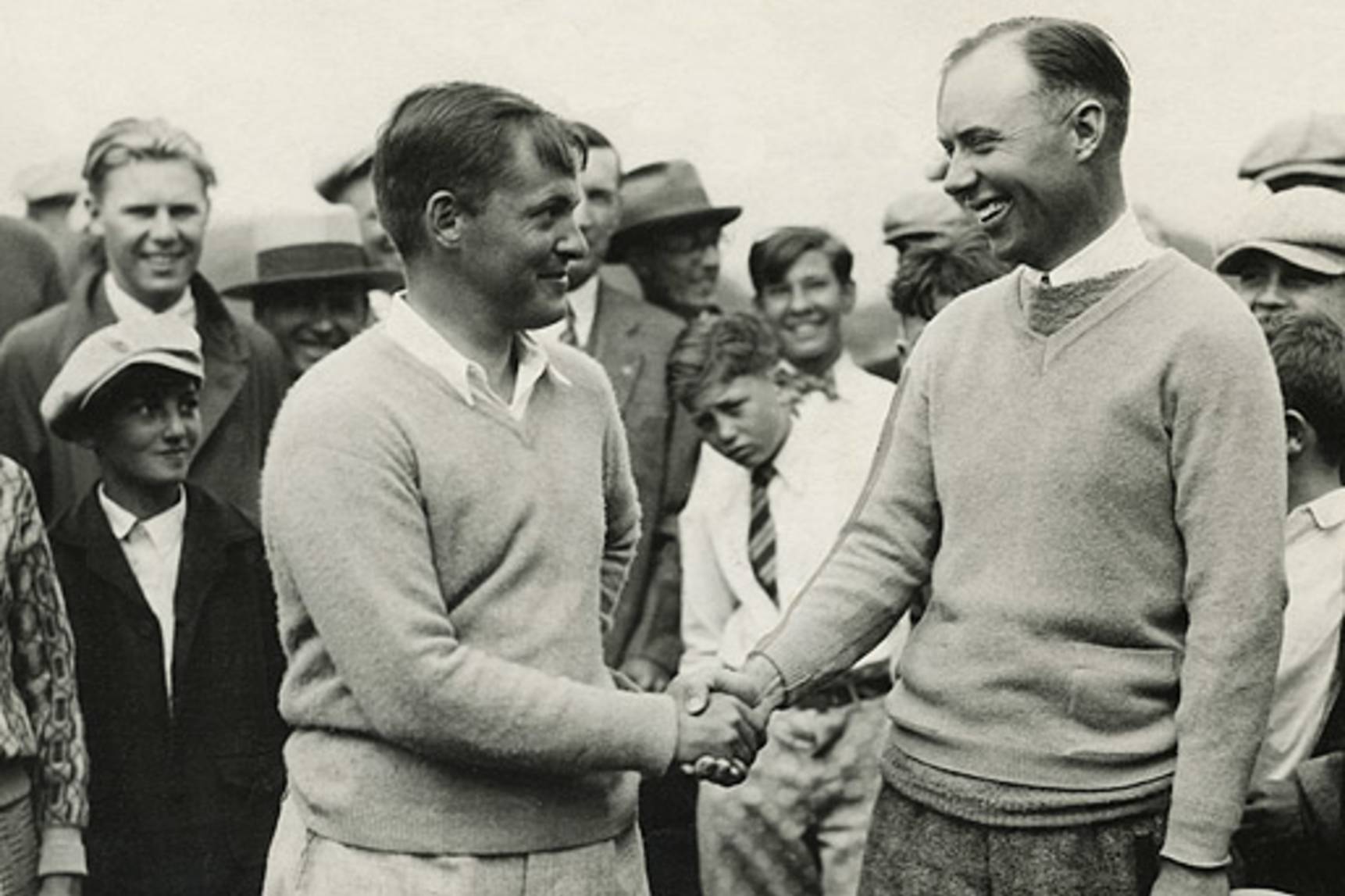
Merion is 5,000-odd yards of ground in Ardmore that keeps being asked to decide who the best amateur golfer in America is. This week it is being asked for the seventh time — more U.S. Amateurs than any other course in the country — and on Sunday another name goes on the Havemeyer Trophy alongside Chick Evans, Bobby Jones, Gary Cowan, Chris Patton and Edoardo Molinari.
Before the last two men walk to the first tee, it is worth remembering what the East Course has already done to the ones who came before them. Six championships, six very different weeks, one very consistent verdict: at Merion the golf course is the opponent that never eases up.
1916: Chick Evans wins, and a 14-year-old learns the hard part
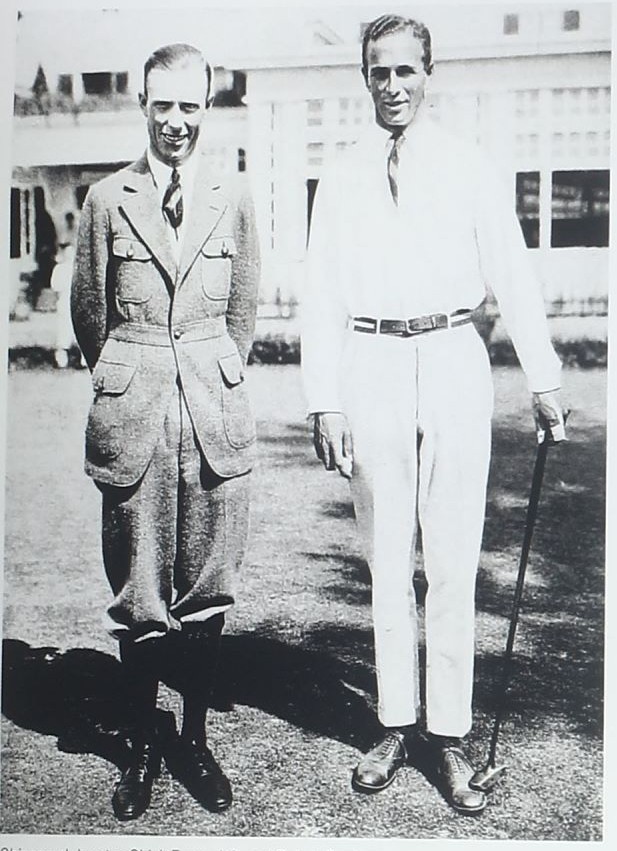
The Amateur came to Ardmore for the first time in 1916, only four years after the East Course opened. The club spent roughly $10,000 preparing it — a crew of twenty men, every tee rebuilt, the eighth green reconstructed, the tenth, eleventh and twelfth fairways plowed, fertilized and resodded. Hugh Wilson's white-faced bunkers were left plainly visible. Merion has never believed in hiding trouble.
Chick Evans arrived as the reigning U.S. Open champion and left with both national titles in the same year, beating defending champion Robert Gardner in the final. He closed it out on the fifteenth, and when it was over his mother came onto the green through the gallery, her glasses misted, and he hugged and kissed her while Merion cheered.
The lasting story of that week belonged to somebody who lost. Bobby Jones was fourteen, "a chunky, chubby broth of a lad," making his national debut. He out-drove grown men. He found Merion's bent greens terrifying — during a practice round a putt got away from him and rolled into the brook. In the first round he and 1906 champion Eben Byers threw so many clubs that Jones later said he won because Byers "ran out of clubs first." Against Frank Dyer he holed out with the wrong ball and only caught it by a tar stain; that afternoon he marked his own with J's all over it.
Then Gardner beat him, and Jones learned the thing Merion teaches best. "The break had come, but it was not my break. My fresh young head was bloody — and bowed. Frankly, I blew up." Walter Travis watched the boy and said, "Undoubtedly, he has the makings of a national champion in the near future." He was right, but only after eight more years of losing.
1924: Old Man Par
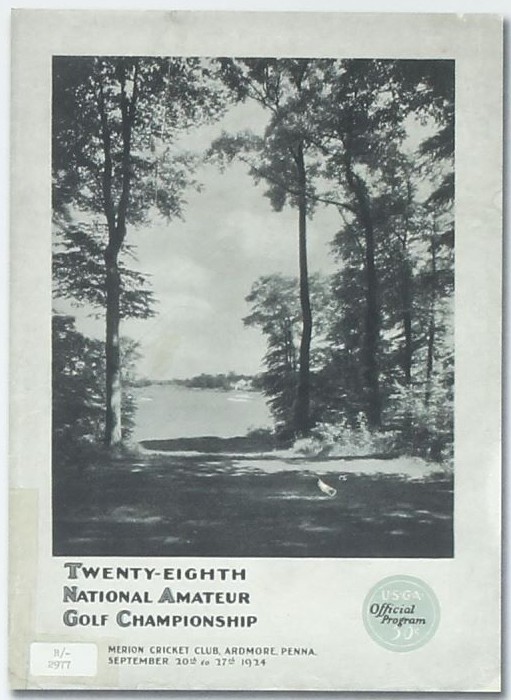
By the time Jones came back, in September 1924, the golf course had grown up too. Ardmore Avenue had been paved and taken out of play; Wilson and William Flynn had reworked the tenth, eleventh, twelfth and thirteenth in 1922, shortening ten by fifty yards and bending it left, lengthening eleven by forty and moving its green to the far side of Cobbs Creek. Jones walked it and said, "This course certainly has advanced with the game."
So had he. He had a U.S. Open, two college degrees, a wife and, at last, an idea. The night before his match against Francis Ouimet, sharing a room at the Greenhill Farms Hotel with O.B. Keeler, Jones explained that he had stopped playing opponents. His opponent had no face and had never swung a club. He called it Old Man Par.
Ouimet, beaten, understood exactly what had happened to him: "Bobby was paying no attention to what I did or where my ball went. He just kept on plugging for par after par." Jones was medalist at 142 and then dismantled George Von Elm in the final, 10 and 8 — his first U.S. Amateur, on the course where he had first been humbled. Von Elm, standing over a concession, put it best: "Don't putt that one, Bob. I've had enough."
1930: the Slam closes at Merion
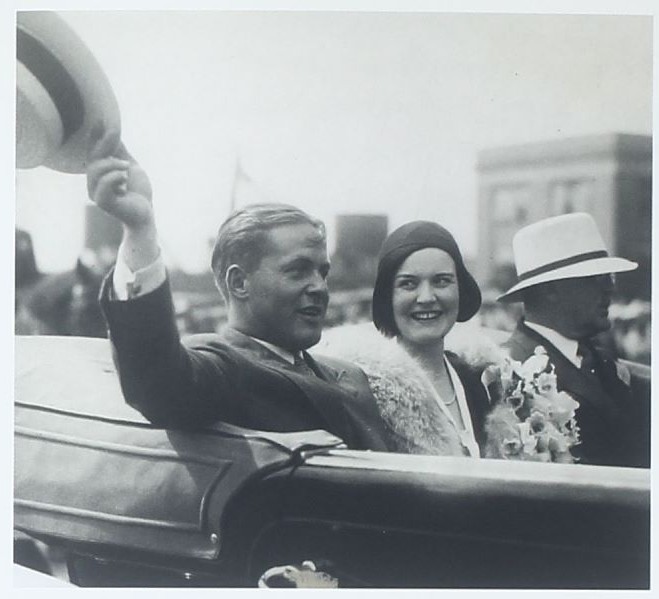
The 1930 Amateur is the most famous week in the club's history and, in a sense, the least competitive one. Jones arrived in September having already won the British Amateur, the British Open and the U.S. Open. Al Laney wrote that "the cumulative excitement of that summer-long quest, participated in by millions on both sides of the Atlantic, has no parallel in the history of sport."
Merion stretched the East to 6,564 yards, installed four miles of sprinkler pipe and 160 outlets, put in a telephone system to report results, and — when dollar spot blighted the thirteenth green — had superintendent Joe Valentine dye the infected turf, the first cosmetic coloring ever used in a national championship. The quarter-finals were played in unbearable heat. Rain finally broke it the night before the final.
Jones tied his own 142 for medalist honors, then went through the bracket. In the semi-final against Jess Sweetser he hit a mashie-niblick into the tenth green that danced at the wicker and stopped two inches away. He apologized for it afterward — "the way that pitch stuck up there like a stab in the back" — and Sweetser told him it was one of the finest strokes he had ever seen.
He beat Eugene Homans 8 and 7. Marines held back the gallery. In the locker room he told Jimmy Johnston, "After today, I'm through with competitive golf," and he was. He tipped his caddie, Howard Rexford, a rolled wad of fifteen $100 bills. From London, Bernard Darwin wrote simply: "Now he has done it."
There is one detail that ought to comfort every amateur in this week's field: in the final round of the Grand Slam, Jones made a double-bogey six on the tenth and penciled "Ha ha" beside the circled number on his card.
1966: Cowan, Beman, and the year the Amateur was stroke play
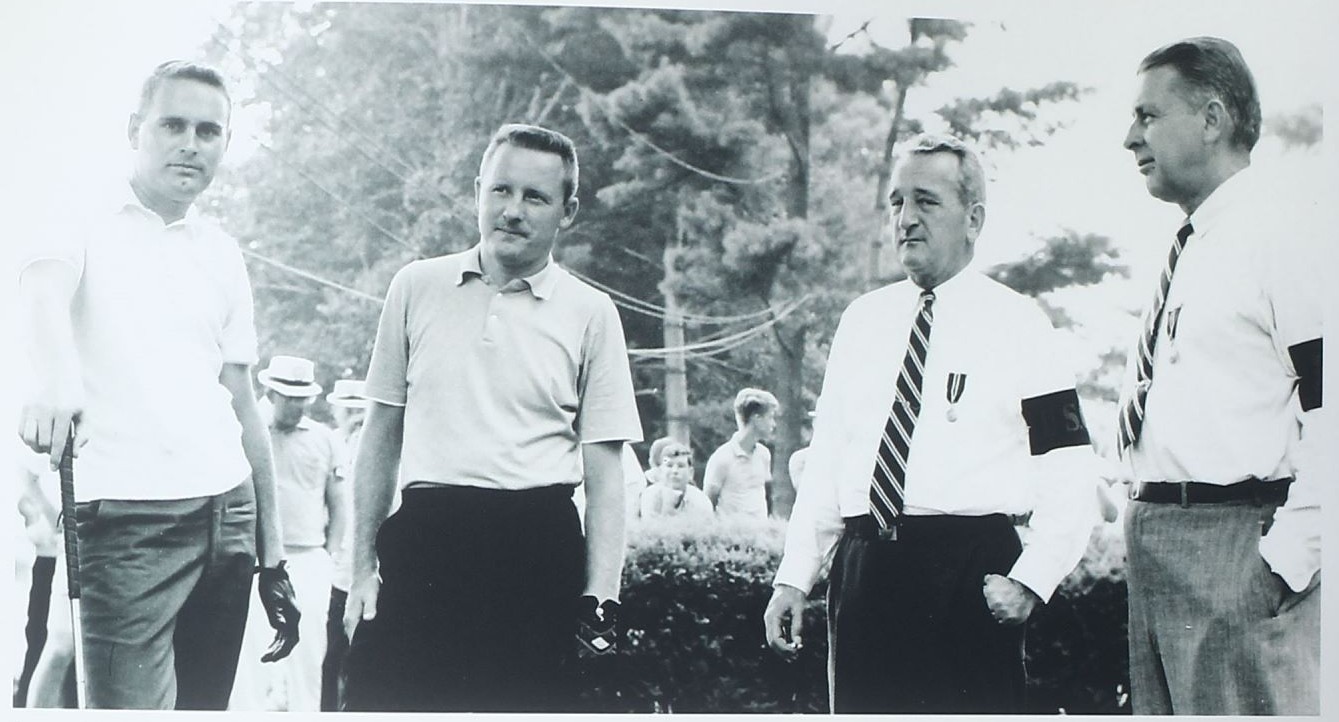
Merion did not get the Amateur back for thirty-six years, and when it did the championship had changed shape entirely — 72 holes of stroke play instead of match play. It was also the first Amateur played with measured yardages; the USGA had the course surveyed. "Now we know the distances are correct," said John Laupheimer.
Joe Dey's assessment of the venue could be printed on the pairing sheet this weekend: "Merion is that sort of course — short, by modern standards, at about 6,500 yards, but ceaselessly demanding thought and vigilance. It was interesting to see modern young 'limberbacks' brought to the humbling realization that golf is not all slug."
Deane Beman led through 36 and 54 holes while playing with a badly injured hand — "it was survival for me," he said, "in a sort of small-dog terrier mode." Gary Cowan chased him down with a Sunday 67 that included a twenty-five-footer on fourteen and a three-iron to eighteen inches on seventeen. Ron Cerrudo missed an eighteen-incher on the last that would have made it three.
Cowan and Beman went to an 18-hole playoff on Monday. Cowan made a fifteen-foot birdie on fourteen, then hooked his tee shot into a tree and made seven on sixteen; Beman missed from two feet on seventeen. Cowan won it 75 to 76 and became the first Canadian to take the Havemeyer.
1989: Patton Pending
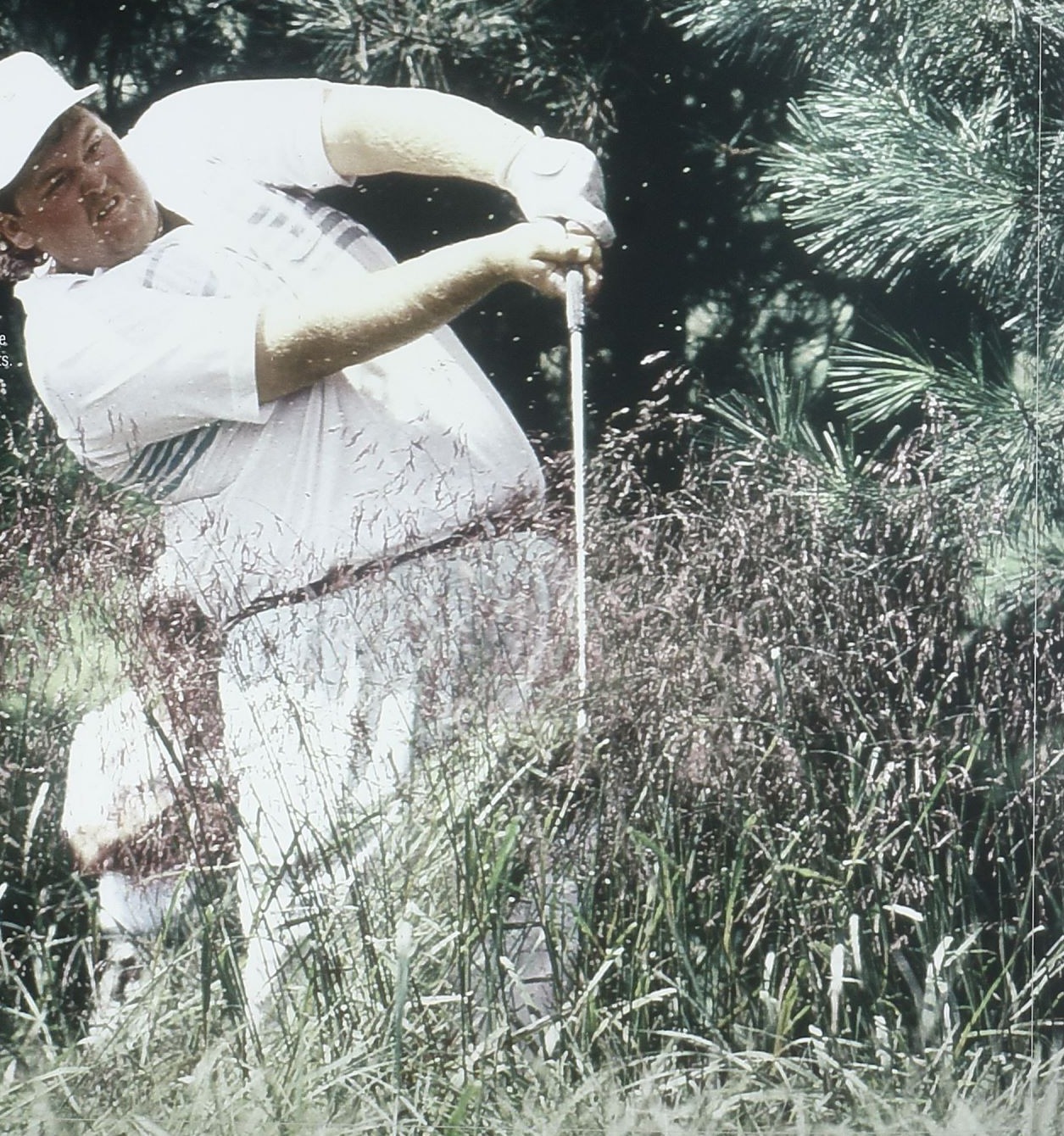
Merion's fifth Amateur produced the most improbable champion of the six. The field was extraordinary — Phil Mickelson, David Duval, Jim Furyk, Steve Stricker, and Jay Sigel, the great Philadelphia amateur — and the golf course, hit by heat and disease, was not at its best; five greens were, in superintendent Matt Shaffer's phrase from a later year, "on the DL."
The winner was Chris Patton, a 300-pound, self-taught junior from Fountain Inn, South Carolina, whose college coach nearly qualified as his first-round opponent. Patton beat everybody in front of him and then endured a 36-hole final in 86-degree heat, an ordeal Bob Rosburg asked him about on air. "I was winning the match," Patton said. "It really pissed me off."
Danny Green, who came to Merion for one reason — asked why, he answered with a single word, "Me-ri-on" — got to the final by beating Sigel and by hitting the ugliest, most effective shots of the week. Patton won, took the Havemeyer from USGA president Grant Spaeth, promptly shanked it so the lid fell off, and had it crowned back on his head. "They got my name on the trophy," he said, "and they can't take it off."
2005: Molinari, and Merion's audition
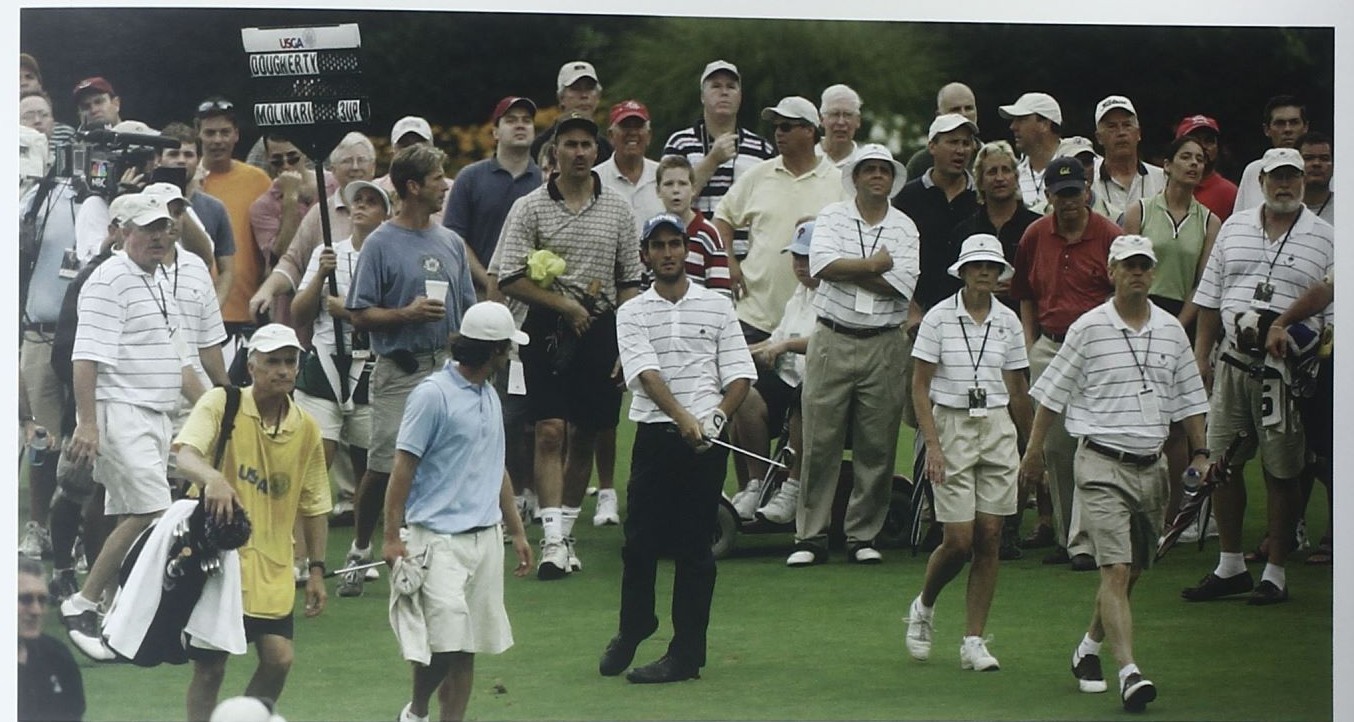
The 2005 Amateur was, everyone understood, a tryout. Philadelphia had spent years listening to the argument that Merion was too short and too cramped for a modern U.S. Open. The club declined to chase 7,000 yards for its own sake. "There were some who wanted to go beyond it because other clubs were doing it," said Bill Greenwood, "but there's more to the game than swinging from your heels."
Fourteen of sixteen Walker Cup players teed it up — Anthony Kim, J.B. Holmes, Webb Simpson, Brian Harman, Colt Knost, Luke List among them. The man who won was a meticulous 24-year-old Italian. Edoardo Molinari made the match-play bracket only by holing a forty-foot bunker shot on the ninth, then survived a playoff, then beat Austin Eaton with a two-iron on seventeen he called "probably the best shot of my life."
Three down at lunch in the final, Molinari ate calmly — "It was like they were at an outdoor café in Rome," one observer said — and came out and made seven birdies in the afternoon to beat Dillon Dougherty 4 and 2. His explanation of Merion is the best short description of what this weekend's finalists face: "The greens got firmer, and I began aiming for the middle of them, just hoping to two-putt for par. It was hard to lose a match if you made par on every hole."
Merion passed its audition. The U.S. Open came back in 2013.
2026: the seventh
Which brings us to Sunday. The 126th U.S. Amateur used Philadelphia Country Club's Spring Mill and Merion East for stroke play and has spent the week narrowing the bracket on the East Course, where the last two standing will play 36 holes for the Havemeyer.
Watch the same holes that decided the other six. The par-4 tenth, shortened and bent left in 1922, has been giving up eagles and sixes in equal measure since Jones wrote "Ha ha" on his card. Eleven, with the creek in front, is where matches get taken away. The stretch home from sixteen — the quarry, the blind wedge at seventeen's cousin, the long walk up eighteen to the terrace — has never once been friendly to a man protecting a lead.
A hundred and ten years after Chick Evans beat Bob Gardner here, the assignment has not changed: make pars, let the golf course do the rest, and try not to blow up the way a fourteen-year-old from Atlanta once did. Somebody will manage it by Sunday evening. Merion will have decided again.
Originally published
Read this piece on Club Docket →