The Basket at the Top of the Pole
How the Merion greenkeeper William Flynn patented golf's most beautiful piece of hardware — and why the front nine is red and the back nine is orange.
By The Historians Archive
August 10, 2026 · 1:55 AM ET
9 min read
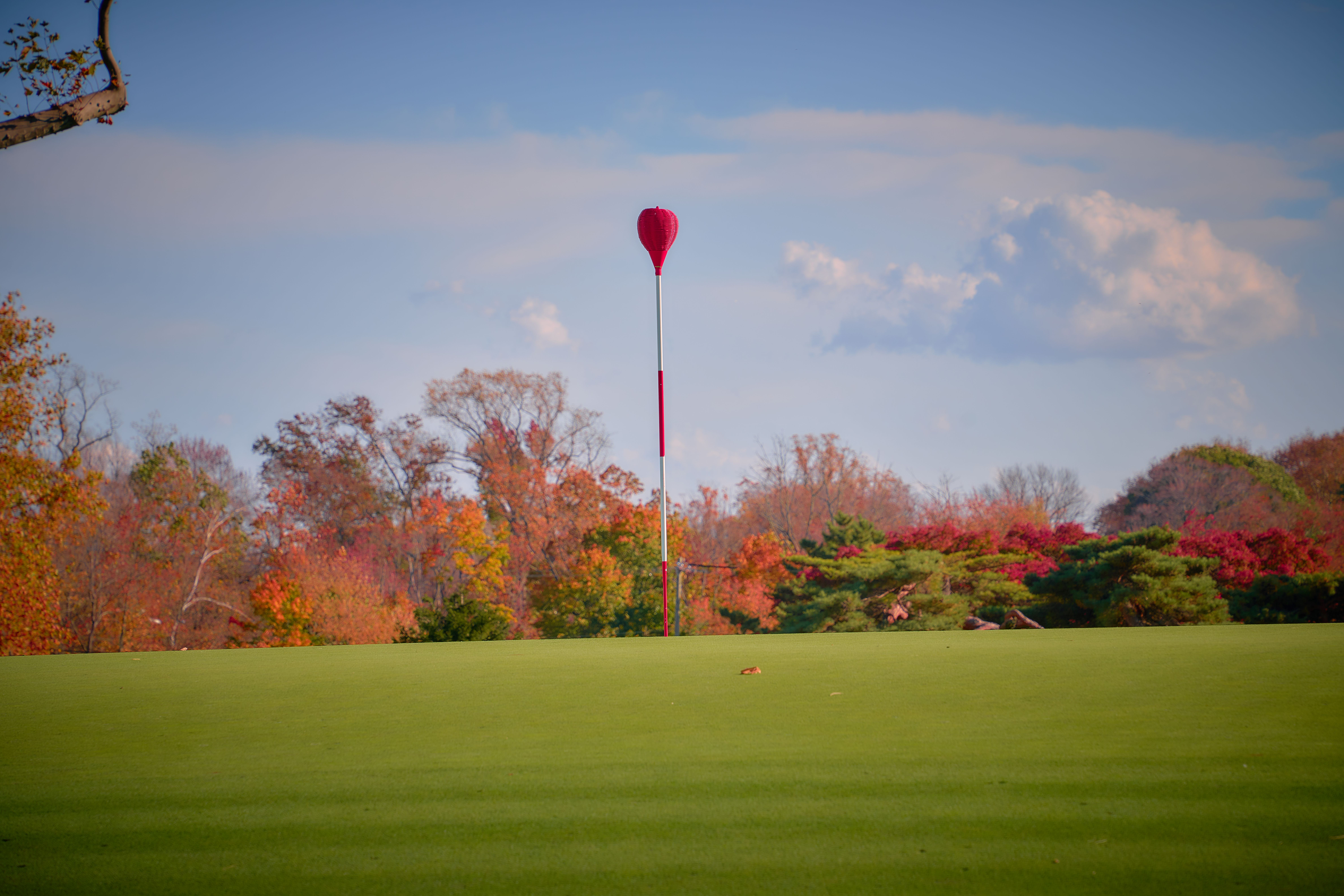
There is no flag on the eighteenth green at Merion. There never really was. Standing in the middle of the most photographed closing hole in American golf is a slim white pole topped by a woven wicker ball the color of a terra-cotta pot — no fabric, no wind reading, no help. It is the single most recognizable object in the American game that does absolutely nothing for you.
That is the point. And the man who made it official, in the eyes of the United States government, was the club's greenkeeper.
A course without its signature
When Merion's East Course opened for play in 1912, the baskets did not exist. This is the detail that surprises people. The newspapers and magazines of the day wrote at length about the new course in Ardmore — its greens, its scale, its ambition — and not one of them mentioned a basket, because there was nothing to mention. Hugh Wilson's holes went into the ground under ordinary flagsticks.
The idea itself was older than Merion, and it was not American. The earliest evidence of cane-and-basket hole markers dates to the 1850s, when a resilient bamboo cane was surmounted with a basket top. Baskets turned up at Prestwick, at Stoke Poges in Buckinghamshire, at Golf de Saint-Germain outside Paris, at Royal Worlington. In 1989, the English golf historian Tony Nickson traveled from Royal Lytham & St Annes to Merion and presented the club with a copy of Michael Brown's painting of the 1903 Scotland–England international at Prestwick. In it, a caddie stands holding a golf standard topped with a basket.
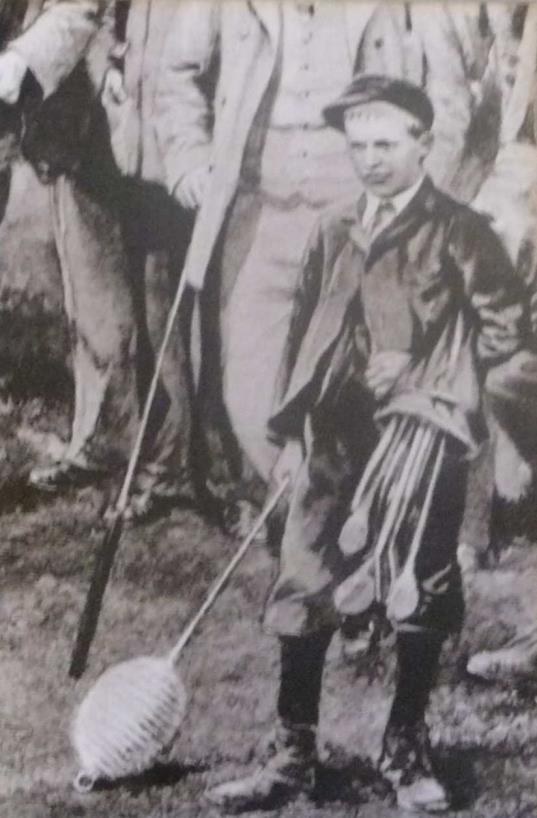
So the concept had crossed the water before Flynn ever picked up a pencil. Hugh Wilson had gone abroad in 1912 to study the great courses — Formby, Hoylake, Troon, Prestwick, Muirfield, North Berwick, St Andrews, the heathland courses around London — and it is entirely plausible that he came home describing something he had seen on a Scottish green to the young man who kept his grass. Wilson, bound by the strict amateur code of the era, could never have commercialized such a thing himself. Flynn had no such problem.
July 2, 1915: the first sighting
The earliest known newspaper account of the Merion baskets ran in the Philadelphia Evening Ledger on July 2, 1915, buried inside a story about whether Merion would land the national amateur championship. It reads like a small miracle of preservation:
"The new hole pins at Merion have been the subject of much favorable comment, not alone among the men stars who played there last, but by the women who played in the Griscom Cup matches three weeks ago, as well. Instead of the usual flags, which, when a head wind is blowing, are invisible, wooden pins, with alternate stripes of black and white, and large, wicker, pear shaped tops, are used. On the out holes the tops are red, on the in holes yellow, and they can be seen for a mile. William Flynn, the Merion greenkeeper, is the originator."
Read that again and note what it does not say. It does not say the baskets were a nod to Scotland, or a piece of clubhouse whimsy. It says they were easier to see. A flag hanging dead in a headwind disappears; a pear-shaped basket, visible "equally clear from all angles," does not. Merion's most romantic tradition began as a practical fix to a visibility problem — and it was the greenkeeper, not the architect, who got the credit in print.
Serial No. 44,154
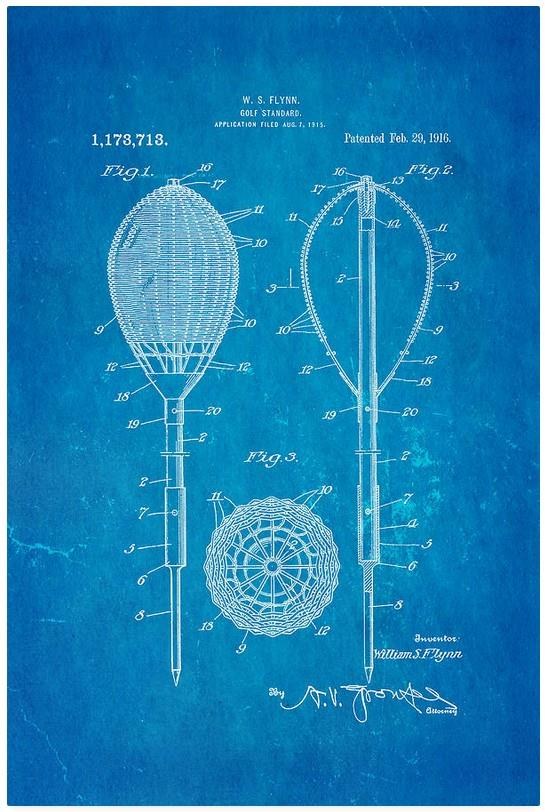
Five weeks later, on August 7, 1915, William S. Flynn of Haverford, Pennsylvania filed an application with the United States Patent Office. On February 29, 1916 — a leap day — it issued as Patent No. 1,173,713, under the plain heading GOLF STANDARD.
The prose of the specification is worth sitting with, because it is the closest thing we have to Flynn explaining himself: "The object of my invention is to provide a novel, inexpensive, light and attractive golf standard for marking the location of the holes in the putting greens of golf courses…"
Novel, inexpensive, light and attractive. Four words, in that order, and they describe the object still standing on Merion's greens 110 years later.
The engineering is charmingly specific. The staff — element 2 in the drawings — is hollow, "bamboo being preferred for lightness," and stands about eight feet above the ground. Its lower end seats in a socket and terminates in a pointed prong that drops through the central opening of the cup and into the soil beneath, holding the pole upright inside the hole. The basket itself, element 9, is "preferably formed of wicker ware for lightness and for appearance," built from horizontal wickers (10) interwoven with longitudinal wickers (11) that run up and over the crown. A screw-threaded pin rises from the top of the staff through the basket, and a nut and washer clamp the whole thing down. A flanged sleeve, pinned through the staff, catches the loose lower ends of the weave.
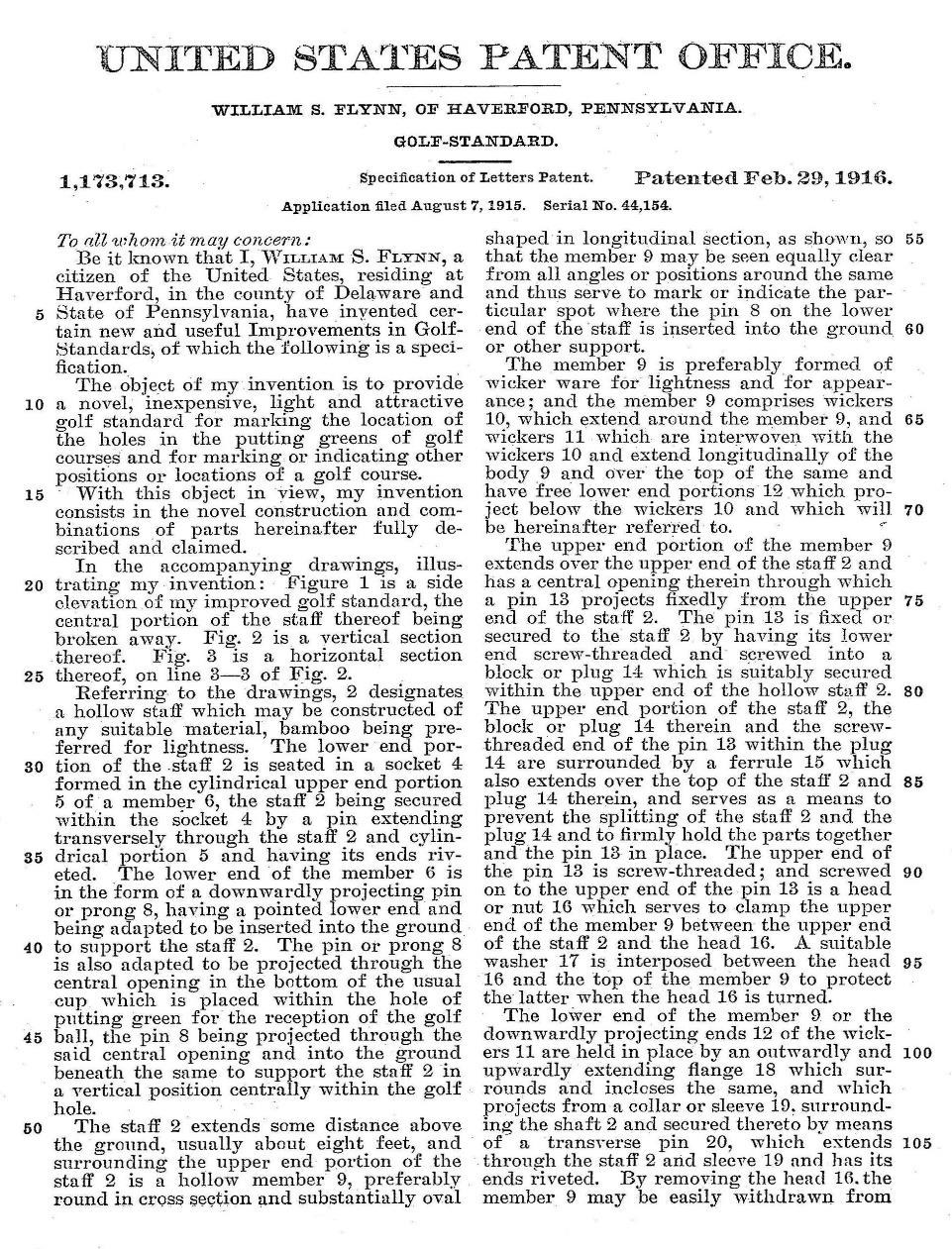
And then the line that gives away the greenkeeper's mind: "By removing the head 16, the member 9 may be easily withdrawn from the staff 2 or replaced thereon, as occasion may require." Flynn was not designing a monument. He was designing something a crew could repair at six in the morning with one wrench.
Champion Golf Standards, and the partner who disappeared
A patent is a piece of paper. A business is something else. Flynn went into one with Frederick C. Peters (1884–1981), a close friend from Ardmore who ran a landscaping outfit and, later, St. Mary's Laundry — the two men likely drawn together by a shared obsession with growing things. Flynn's daughter, Constance Lagerman, remembered the friendship in unusual detail, including the fact that when Peters was serving overseas in the First World War, Flynn stood in for him as a replacement bridegroom at his own wedding ceremony. Not, she noted, an uncommon practice at the time.
Together they manufactured and sold "Champion Golf Standards." Advertisements ran in the March, September and October 1916 issues of The American Golfer, offering the flagsticks in seven- and ten-foot lengths and boasting that they had been adopted by some of the leading courses in the country. One ad was photographed with the Merion West clubhouse in the background.
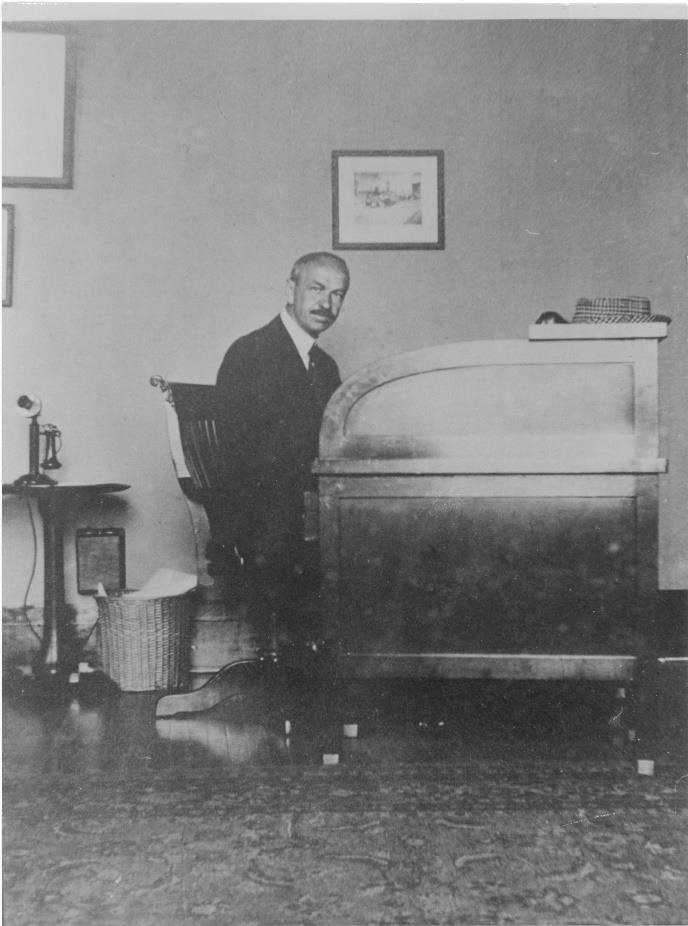
Then it stopped. The advertising ended, the partnership dissolved, and no one has ever satisfactorily explained why. The likeliest culprit is the war: Flynn went to work for Bethlehem Steel, Peters shipped to Europe, and the moment passed. Peters went on to a long public life — state legislator, county commissioner, founder of the County Planning Commission, Collector of Customs for the Port of Philadelphia under Eisenhower. Flynn went on to design Shinnecock Hills, Cherry Hills, The Cascades and dozens more, becoming one of the towering figures of American golf architecture.
Neither man ever made real money from the wicker basket. It simply outlived them.
What changed, and what didn't
Compare the poles at Merion today with the patent and two differences emerge. Flynn's staff did not taper at the bottom, which must have made a chip-in an even crueler lottery than it is now. And Flynn's baskets carried a narrow band of open weave at the base, where today's are woven all the way down into the metal cone at the pole. Head professional Scott Nye's verdict on the modern version is the correct one: it is sturdier. Flynn's open band was a breakage waiting to happen.
The colors changed too. The Evening Ledger reported red going out and yellow coming in; today it is red on the front nine and a far more visible orange on the back. Why? The best answer in existence came from Richie Valentine, Merion's long-serving superintendent, to Matt Shaffer, who would later run the golf grounds himself. When Shaffer asked about the colors, Valentine answered with a question — what did the colors remind him of? — and then supplied it himself. Red is the color of Toro mowers. Orange is the color of Jacobsen.
In the parsimonious Quaker way, the touch-up paint already sitting in the maintenance shed became the club's livery. Perhaps they ran out of Toro and switched to Jacobsen. Perhaps a different color for each nine was intentional from the start. Merion, being Merion, has never felt the need to settle it.
The clubs that tried it, and the club that kept it
For a while, baskets were nearly a movement. Around Philadelphia they went up at Huntingdon Valley (1918), LuLu (1918), Bala (1918), Old York Road (1920) and Brookline Square (1924). Beyond it: the Old White at The Greenbrier (1927), San Francisco Golf Club (1927), Winged Foot's West and East courses until 1929 — A.W. Tillinghast is the suspected hand there — and Sea Island (1930). A 1923 photograph of Winged Foot's first hole on the West still shows a wicker basket standing against the sky, with the old water tower behind it.
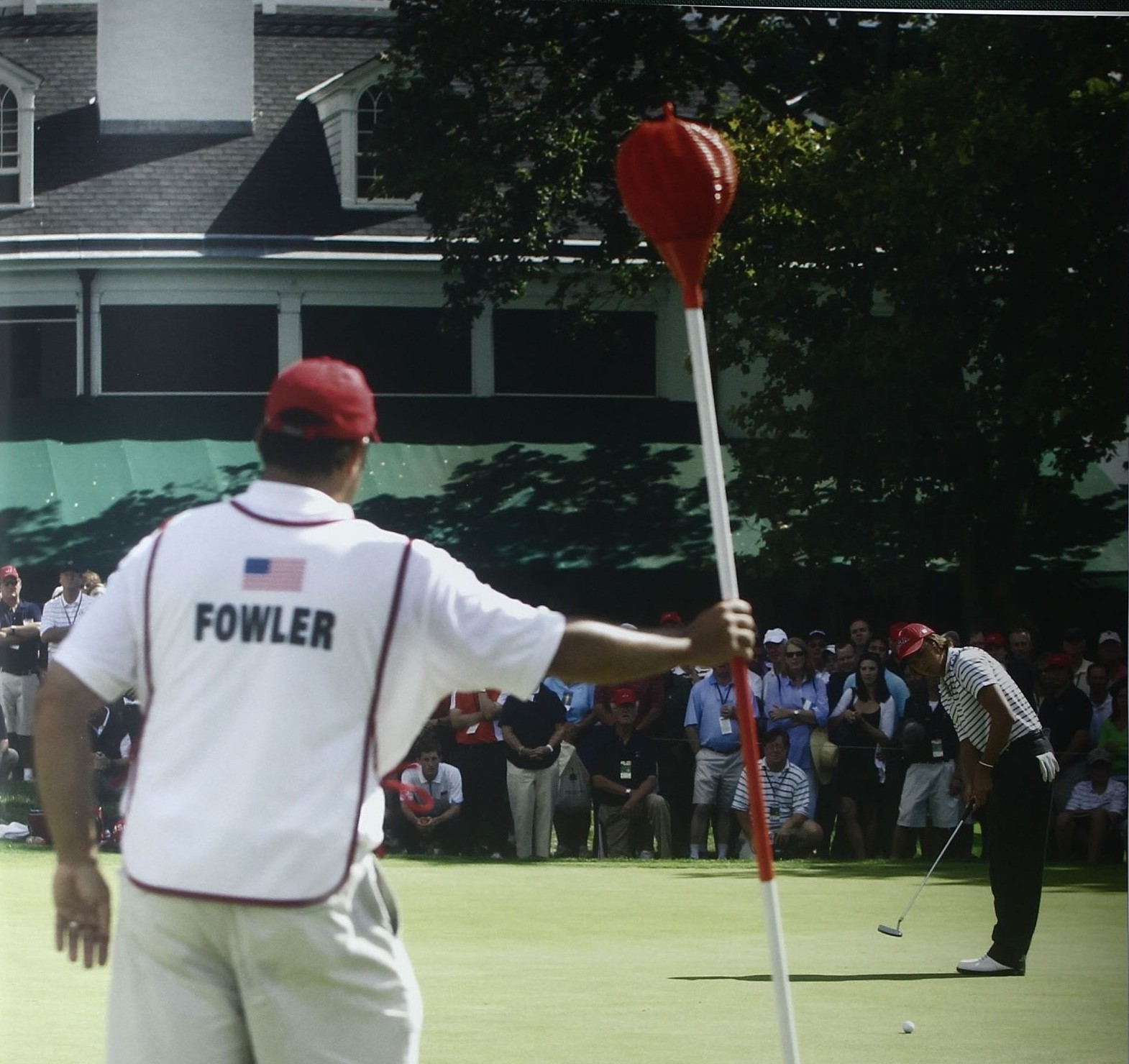
One by one, they all went back to flags. Golf standardized the hole in 1894, adopted the metal cup, and settled on fabric because fabric tells you what the wind is doing. Practicality won everywhere except the one place that had decided practicality was not the point.
It fits. Merion posts no yardage markers. It does not permit laser rangefinders. The golfer and the caddie are expected to read the ground and the air themselves and arrive at a number the old way. A flagstick that refuses to report the wind is not an oversight at Merion; it is the house philosophy, woven in wicker and screwed down with a nut and washer.
The basket sits in the club's logo now, centered in a green wreath above the date 18|96, stamped on the cover of the East Course restoration book and on every napkin in the place. Flynn's patent expired generations ago. His invention did not.
Originally published
Read this piece on Club Docket →